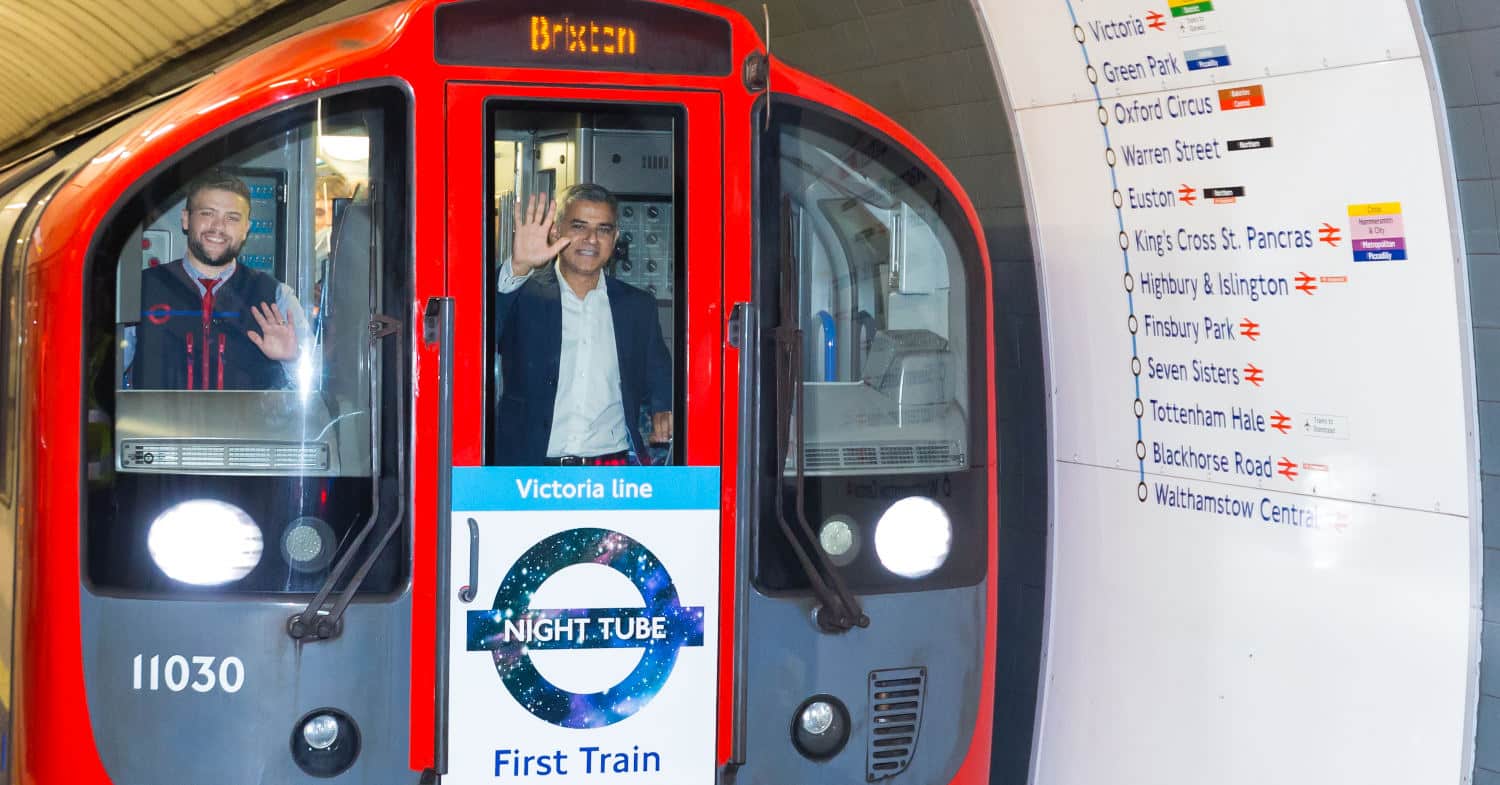
Transport for London (TfL) and Mayor Sadiq Khan are marking the tenth anniversary of Night Tube this August 2026. The night-time Underground service has transformed mobility in the British capital since its launch on 19 August 2016. Over the past decade, the network has recorded more than 67 million journeys on Night Tube and Night Overground services.
The service has become critical infrastructure for London’s night-time economy, valued at £139 billion a year, connecting workers, leisure travellers and visitors with the city’s main cultural and commercial centres around the clock.

Night Tube was developed during Boris Johnson’s mayoral term. Although its launch was scheduled for September 2015, it was delayed by several months due to a failure to reach an agreement with staff. The RMT union described the plan as “rushed and flawed from the outset” and called strike action.
In May 2016, Labour politician Sadiq Khan succeeded Johnson, and Night Tube became a reality just three months later.
A decade of record figures
Demand for Night Tube has shown sustained growth, particularly since the pandemic. TfL reports an average of more than 81,000 journeys per night, with Saturdays habitually attracting more passengers than Fridays. The highest peaks are recorded during major events: on the night of 11 July 2026, when England faced Norway in the FIFA Men’s World Cup quarter-final, an estimated 170,000 journeys were made—more than twice the number recorded on a typical Saturday.
Another notable milestone was Halloween night in 2025, which fell on a Friday and reached 123,000 journeys, also well above the average. Outside New Year’s Eve, the first weekends of December are usually the busiest, driven by the festive atmosphere and Christmas activities in central London.
Employment and accessibility impact
Night Tube is vital for London’s 1.3 million night-time workers, who are employed in sectors including healthcare, hospitality, transport, culture and entertainment. The service has reduced average journey times by around 20 minutes, with some trips shortened by more than an hour.
Andy Lord, London’s Transport Commissioner, emphasises that Night Tube “is much more than a transport service: it is a vital connection to work, leisure and home”. He also highlights its contribution to sustainability objectives by reducing reliance on private cars.
Industry perspectives
Representatives from the business and cultural sectors have highlighted Night Tube’s role. Michael Kill, CEO of the Night Time Industries Association, describes it as “fundamental infrastructure” for a night-time economy that employs millions of people. Angela Hartnett OBE, chef-patron of Murano London, recalls that the idea emerged after repeatedly hearing from her team that transport was the main barrier to improving their night-time working conditions.
Sarah Walker of the Safer Business Network, meanwhile, stresses its impact on women’s safety by providing a reliable and secure alternative for travelling at night. Allen Simpson of UKHospitality and Ros Morgan of the Heart of London Business Alliance agree that the service has been “decisive” in driving the growth of night-time leisure and hospitality in the West End and other commercial districts.
Tenth-anniversary celebrations
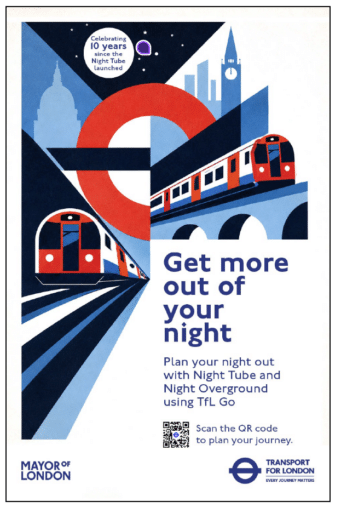
To mark the milestone, TfL has launched a commemorative poster and three competitions offering prizes including a themed party at Cahoots bar, tickets for late-night performances at Ronnie Scott’s jazz club, and copies of the official poster. It is also working with six Business Improvement Districts (BIDs)—Better Bankside, Brixton BID, New West End Company, Team London Bridge, The Fitzrovia Partnership and Vauxhall One—to share testimonials on how Night Tube has benefited their night-time businesses.
With more than 67 million journeys in ten years, Night Tube has established itself as a global benchmark for night-time urban transport, demonstrating that a 24-hour city requires infrastructure capable of operating without interruption.