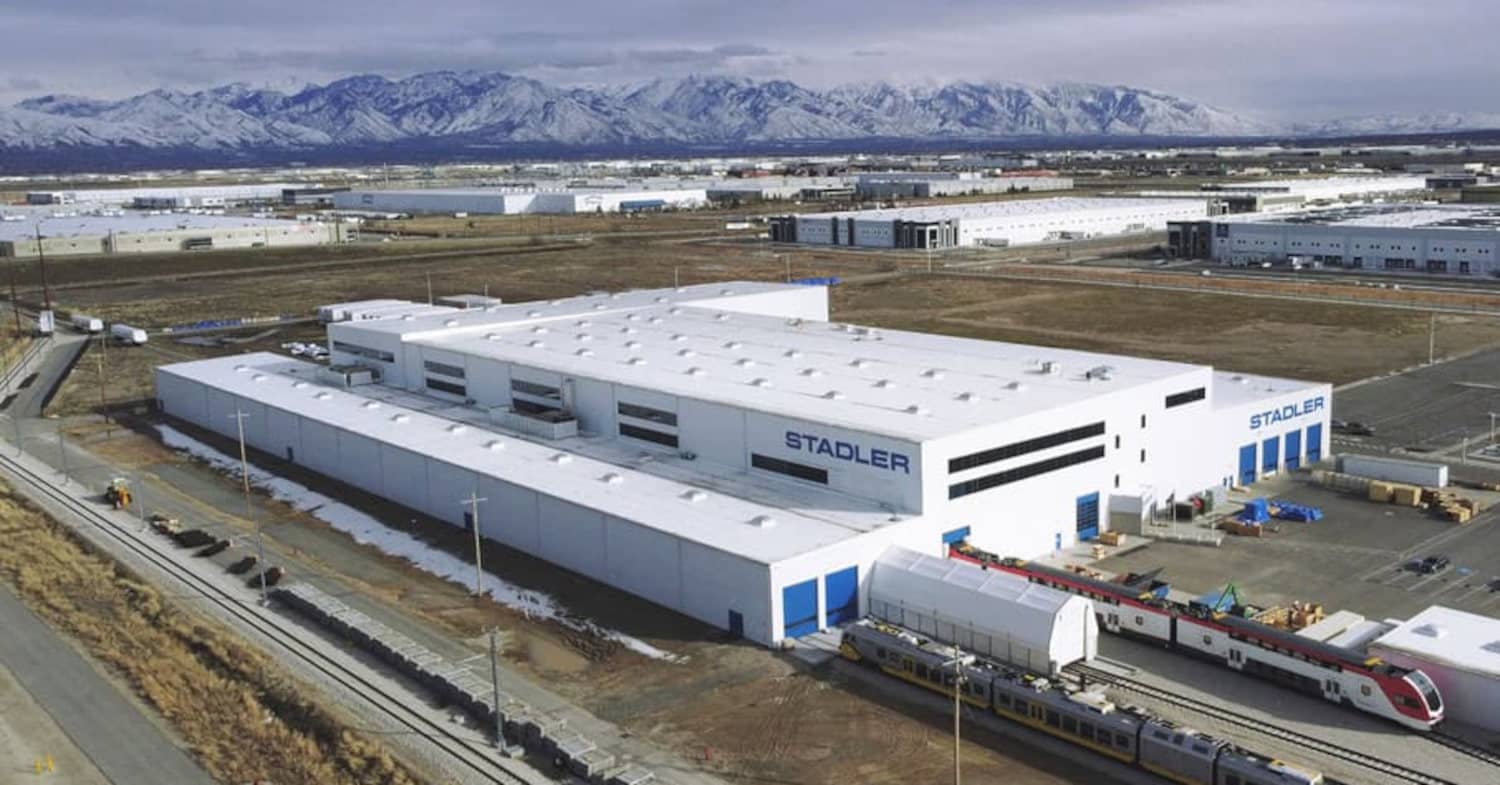
Stadler Rail has confirmed the positive trend begun in 2025 during the first half of 2026, with key indicators evolving very favourably. Revenues rose to CHF 2.0 billion, a 40% increase on the CHF 1.4 billion recorded in the same period in 2025.
The EBIT margin improved by 1.4 percentage points, from 2.6% to 4.0%, while operating profit (EBIT) stood at CHF 79.5 million, more than double the CHF 36.9 million a year earlier. Consolidated profit reached CHF 31.2 million, slightly above the CHF 30.9 million in H1 2025. The smaller rise in net profit compared with EBIT is attributed mainly to the absence of a one-off positive foreign-exchange effect of around CHF 20 million in the prior period, alongside higher costs for bank guarantees linked to orders and increased interest and tax expenses.

Record order book
Order intake was very strong at CHF 2.7 billion (versus CHF 1.7 billion in 2025), and the order book hit an all-time high of CHF 33.3 billion. This record volume provides solid visibility of future revenues and stability for the coming years.
Strategic contracts in Berlin
Among the most notable orders are contracts for Berlin’s S-Bahn and U-Bahn. In July 2026, Stadler was commissioned to supply 350 new four-car S-Bahn trains, with 30 years of maintenance services, as part of a consortium with Siemens and Deutsche Bahn.
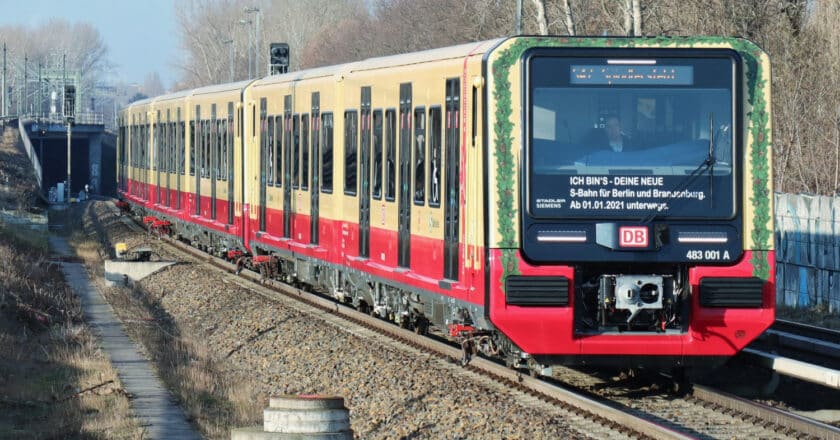
In addition, Berliner Verkehrsbetriebe (BVG) has commissioned a further 166 carriages for the broad-gauge (large-profile) lines of the Berlin underground, meaning that all new S-Bahn and U-Bahn will be manufactured by Stadler at its Berlin-Pankow plant.
International expansion and diversification
In addition, Berliner Verkehrsbetriebe (BVG) ordered 166 additional cars for the large-profile (wide-gauge) lines of the Berlin metro, meaning all new S-Bahn and U-Bahn rolling stock will be built by Stadler at its Berlin-Pankow plant.
International expansion and diversification
Stadler extended its global footprint in H1 2026, delivering vehicles to 50 countries across Europe, North America, Asia, Oceania and Africa. Key contracts included:
- Montenegro: Three FLIRT trains for ŽPCG.
- Ireland: First order for eight FLIRT Intercity trains for Iarnród Éireann and Translink, to be used on the Dublin–Belfast Enterprise service.
- Copenhagen: Supply of 226 fully automated commuter trains in partnership with Siemens, as part of a €3,000 million project that will create the world’s largest driverless rail system.
- Turkey: 35 modern EURO4001 locomotives for TCDD Taşımacılık.
The ‘Services & Components’ segment saw a 95% increase in order intake, to CHF 515.1 million, while the services order book grew 3% to CHF 9.7 billion.
Outlook and challenges
Stadler confirms its guidance for the remainder of 2026, with revenues well above CHF 5 billion and an EBIT margin above 5%. Over the medium term, the company expects to lift the EBIT margin to between 6% and 8%, while keeping revenues above CHF 5 billion.
Challenges remain, however. The aftermath of the DANA flood disaster in Valencia in October 2024 continues to weigh negatively on results, with cost impacts and delivery delays expected to persist until 2027. In addition, the difficult economic environment in Germany continues to drag on group performance, although efficiency-improvement measures implemented in Berlin since early 2025 are proving effective.
A strong Swiss franc also had a negative impact, reducing consolidated revenues by CHF 30 million. Free cash flow was slightly negative at –CHF 54.4 million, a significant improvement from –CHF 744.2 million in H1 2025, while the net cash position stood at –CHF 424.0 million.