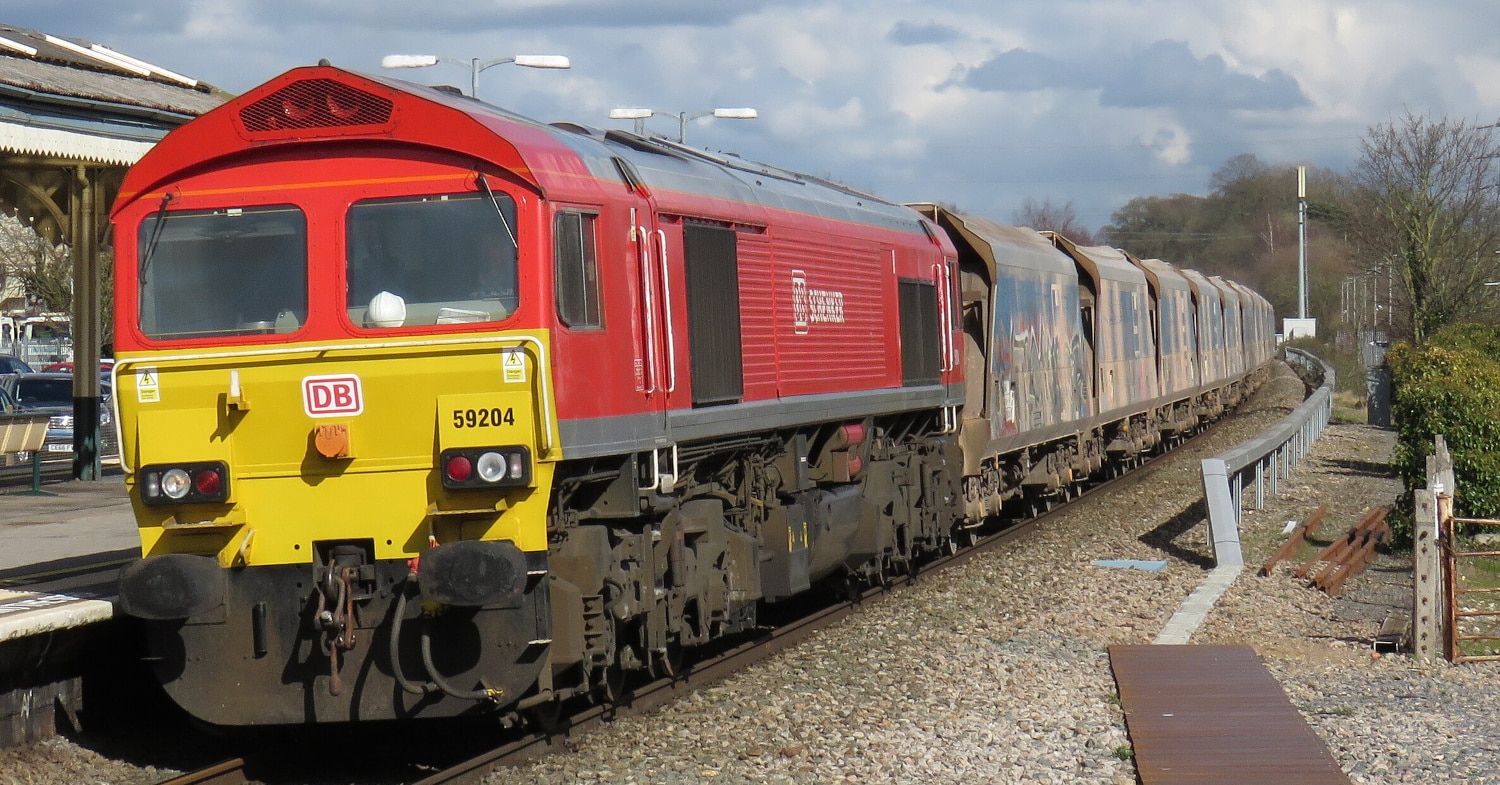
Deutsche Bahn has started the sale process for DB Cargo UK, its British rail freight subsidiary headquartered in Doncaster, England. The decision follows a strategic rethink by the German group, which is prioritising its Central European operations after state aid was approved by the European Commission in 2024.
Corporate strategy and regulatory context
DB Cargo UK chief executive Andrea Rossi confirmed to the company’s 2,155 employees on 17 August that the UK management board had appointed legal and financial advisers to drive a structured sale process. According to Rossi, DB Cargo AG has stated that its strategic focus will increasingly centre on “its Central European operations, which are undergoing significant restructuring following the European Commission’s state aid decision”.

The decision, issued in 2024, authorised €1.9 billion in German government support for DB Cargo, subject to restructuring measures and the divestment of certain assets and interests. The company must be profitable by 2026 and may not receive cross-subsidies from its parent. Against this background, the German group is seeking a new owner for its British operator capable of providing “additional capital, broader market opportunities and the scale required for the next phase of the business’s development”.
Operations and assets involved
DB Cargo UK, established in 1995 as English, Welsh & Scottish Railway (EWS) and acquired by Deutsche Bahn in 2007, is one of the UK’s largest freight operators. The company employs 2,200 people, operates a fleet of 228 diesel and electric locomotives, and provides freight, infrastructure and charter passenger services in the UK, as well as continental freight connections via the Channel Tunnel.
Rossi acknowledged that, despite improvements in operational performance and financial efficiency delivered through the company’s transformation programme, “the benefits of those improvements have been offset by external factors, largely outside our control”. These factors have increased an already complex cost base, affected key markets and reduced volumes and revenue. Nevertheless, he stressed that the business retains “a significant market share, a diverse customer base, a substantial asset base and an extensive property portfolio”.
Sale process and advisers
According to Sky News, DB Cargo UK is working with advisory firm Interpath on an auction and has already held discussions with potential bidders. Deutsche Bahn, however, has qualified this by saying that the talks remain at a “very early and non-binding” stage. The company has stated that operations will continue on a “business as usual” basis throughout the process, with services running normally.
Union reaction: ASLEF calls for job protection and a greater public role
Train drivers’ union ASLEF reacted cautiously to the announcement. Its general secretary, Dave Calfe, said that “DB Cargo drivers have worked hard for the company day-in, day-out throughout years of uncertainty,” and insisted that “their jobs must be protected in any sale”.
Calfe criticised the fact tha“Private companies undercut each other rather than grow the business of freight on rail” and called on the UK Government to “expand publicly owned rail freight”.
In its Rail Freight Future policy document, ASLEF advocates investment in infrastructure to create freight capacity, completion of HS2, delivery of the long-awaited Ely Junction upgrade and progress towards a continuous electrification programme. The union also wishes “levelling of the playing field between road and rail by reviewing road fuel duty and track access charges”.
Possible scenarios: a public ‘UK Cargo’?
Speculation is circulating about potential bidders, including international shipping lines with logistics interests. ASLEF, however, sees a “golden opportunity to end the race to the bottom” if the state assumes a more direct role.
The union argues that 90% of rail freight’s economic benefits are generated outside London and the South East. It maintains that “the railways should be fully nationalised”, viewing a publicly owned freight operator as a step in that direction.