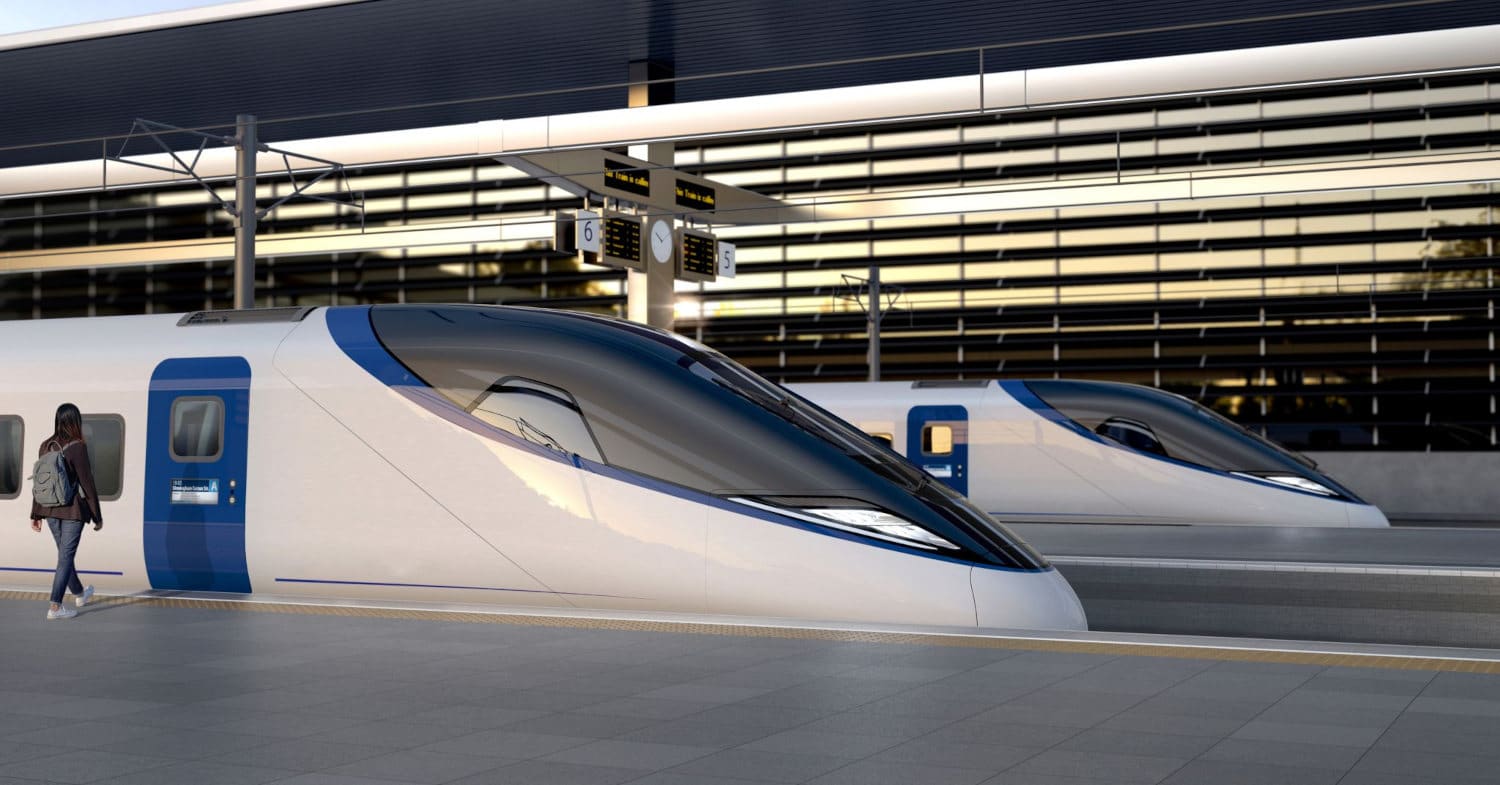
The future of the HS2 high-speed corridor between Birmingham and Manchester has returned to the centre of the UK political debate. Greater Manchester Mayor and candidate to replace Prime Minister Keir Starmer, Andy Burnham, has proposed reactivating the northern leg cancelled in 2023.
Announced during the Makerfield campaign, the initiative seeks not only to reinstate the rail link but to do so under a different technical and financial framework from the original scheme.

High-capacity railway to drive northern England growth
Burnham argues that the lack of high-capacity rail infrastructure in northern England is constraining regional economic growth, particularly as the West Coast Main Line approaches operational saturation. Reinstating HS2 between Birmingham and Manchester would release capacity for both passenger services and freight paths, strengthening network resilience.
From an engineering standpoint, the proposal departs from the original HS2 specification. Technical studies point to a lower-specification line—with maximum speeds around 300 km/h versus the originally planned 360 km/h—enabling cost reductions through measures such as ballasted track superstructure rather than slab track, and greater use of existing alignments. Estimates from 2024 suggest this redesign could reduce costs to around 60% of the original scheme.
A reduction in maximum speed is also under consideration for the London–Birmingham section under construction, as a means to curb escalating costs.
Mixed funding model for HS2
On financing, Burnham proposes a Crossrail-style model combining public investment with private-sector contributions and land value capture mechanisms. These include business rate supplements, developer contributions, and uplift in land values around stations. There is also consideration of allowing regions to retain a share of locally generated income tax, aligned with a more devolved fiscal model.
The proposal has some institutional and industry backing. Bodies such as the High Speed Rail Group stress that the Birmingham–Manchester link is critical to maximising HS2’s value as an integrated network. However, questions remain over the political feasibility of local funding contributions and the need for a substantial Treasury grant.
In parallel, portions of land and planning developed for the cancelled section remain in place or could be repurposed, facilitating potential reactivation. The link also sits within the broader Northern Powerhouse Rail strategy to enhance east–west connectivity across the North.
With Phase One costs between London and Birmingham already estimated at over £100bn, the debate over how and when to extend the network northwards remains open, with Burnham’s proposal among the most defined options to date.