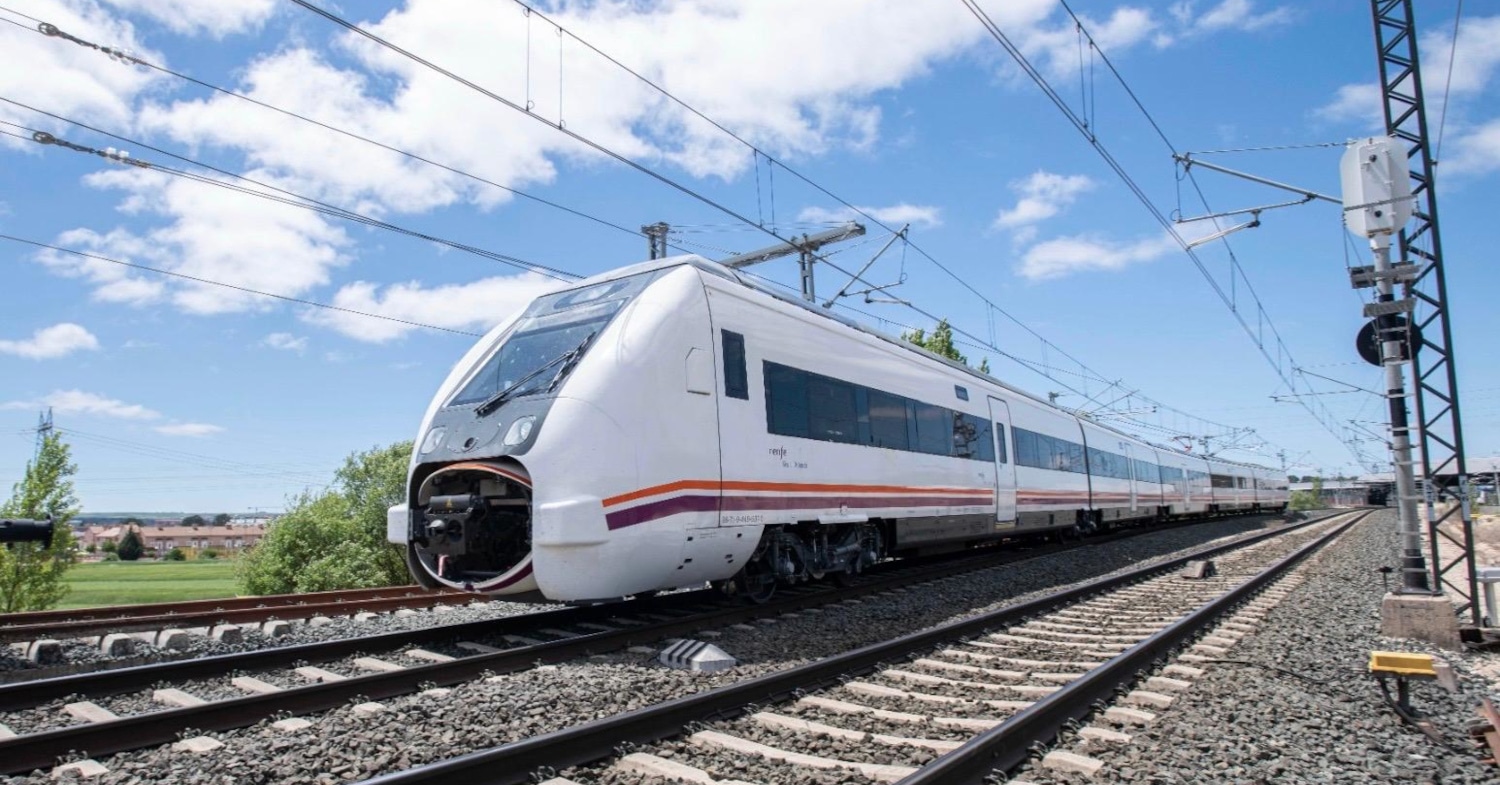
The Spanish Council of Ministers has approved the continuation of the Proximity rail services introduced in 2023 as a pilot scheme, combining suburban (Cercanías) and regional operations under Public Service Obligation (PSO) contracts, after a favourable performance assessment.
The measure applies to the five corridors established three years ago: Palma del Río–Villa del Río, Madrid–Fuenlabrada–Illescas, Málaga–El Chorro–Caminito del Rey, Murcia–Cartagena and Medina del Campo–Valladolid–Palencia. These will remain in operation until the expiry of the contract between the central government and Renfe, including any potential extension. However, no rollout to additional corridors is planned.

Efficiency has been assessed using three indicators: load factor (passenger-km/train-km capacity), cost recovery ratio (revenue/costs) and usage recurrence. Four of the five services have been deemed efficient, while Málaga–El Chorro–Caminito del Rey shows very low performance; in this case, the Proximity offer will be retained as a service integrated with Media Distancia (MD) trains. All integrated services have delivered satisfactory results.
With service frequencies positioned between Cercanías and conventional regional services, these operations are intended to address daily mobility needs in specific catchment areas. After three years as a pilot, they will be subject to a further review within a maximum period of four years.
The initiative forms part of the Sustainable Mobility Law and aligns with policy objectives on territorial cohesion, accessibility and modal shift away from private car use.