
Since the Adamuz derailment, delays on Spain’s high-speed lines have become routine. The severity of that incident has made drivers and Adif High Speed more cautious about safety.
Faced with track imperfections, numerous TSRs are being imposed; on the Madrid-Barcelona HSL, these generate up to three hours of delay. An unintended consequence: no time for maintenance.

While this article references that line, the issue extends across the network.
Maintenance window
The slot between the last train’s arrival and the first departure is known as the maintenance window in railway parlance.
These are hours when Adif HS halts services to carry out upgrade works. On the Barcelona line, the last train is scheduled into Madrid at 23:54, with the first out of Atocha at 05:40. At Sants, the last arrives at 23:58, and the first departs at 06:09.
That means, broadly speaking (reality is more nuanced), maintenance works can run from 00:00 to 05:30.
However, add travel time for machinery and staff to the work site. Though HSLs have multiple bases and PAETs along the alignment, shifting that kit is slow. In some cases, it takes up to one hour.
Late-running trains
When Adif gets word of track defects, it slaps on a TSR based on assessed risk. A dodgy section might be perilous at 300 km/h but safe at 160 km/h.
By analysing vibes logged by trains, plus checks with a track recording train or visual inspection, Adif HS’s maintenance contractor decides if it’s a ride comfort issue or needs fixing. If action’s required, they schedule the job.
es whether it is a comfort problem or whether action is required. If action is required, it schedules an intervention to be carried out.
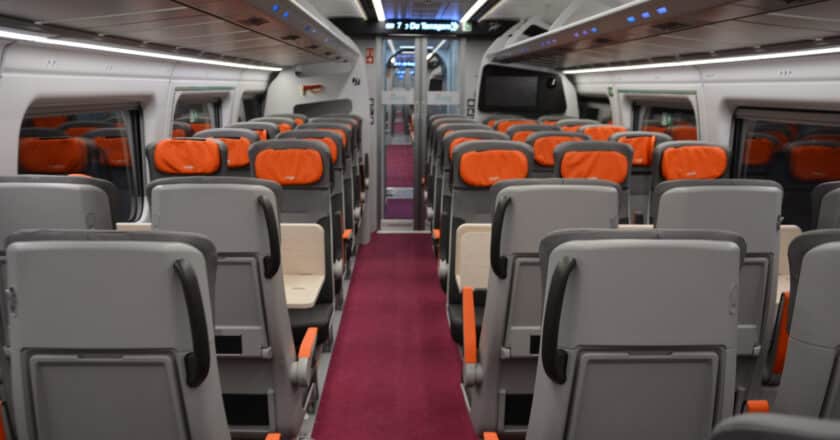
Vibrations on trains: Is it safe to travel by rail?
But lately, we’re seeing trains arrive up to three hours late. Beyond passenger grief, this sparks a cascade of operational headaches. What’s worst: Adif AV is not reacting.
One is track maintenance. Some nights leave barely two hours for the lot, including kit deployment.
It doesn’t cut it. Work can happen, but barely.
If this persists, we spiral: more TSRs mean later arrivals, slimmer maintenance slots. Less upkeep breeds more defects, harsher TSRs, and even later trains…
Possible solutions
Maintenance windows must be honoured—or expanded to catch up on lost work.
Adif HS and train operators should coordinate to ensure no workings between 00:00 and 05:30. Fixes rest on four pillars.
- Advance the last trains’ departure by at least two hours. If they leave at 19:00 instead of 21:00, TSRs won’t stop them from reaching their destination before midnight.
- Advance last trains by at least one hour, and delay first trains by one hour. Operationally trickier than the first option, but hits fewer late-night essentials.
- Extend the window on one track. Run a single track for hours to free up one of two tracks for work. Most safety-sensitive for the ganger teams.
- Shut the line for days. Desperate diseases must have desperate cures: the nuclear option would halt all traffic, letting maintainers labour 24/7 in safety.
All four spell major operational pain. But letting the maintenance window atrophy to nothing will brew far worse.