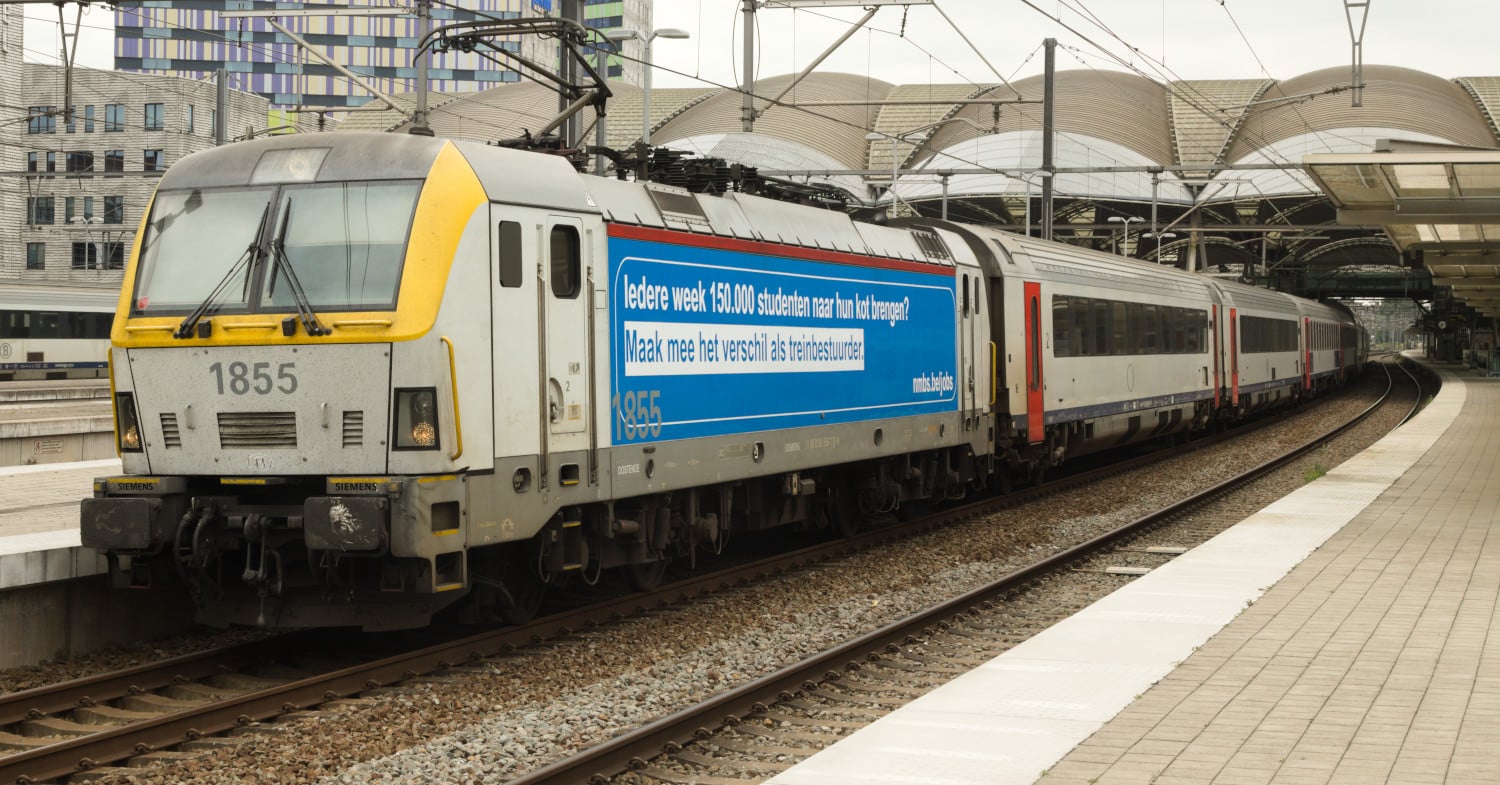
The Belgian federal government has taken the first formal step towards liberalising domestic passenger rail services. On 18 July, the Council of Ministers approved a reform strategy ending years of studies and preparatory work.
The plan establishes a phased transition towards competition once the current public service contract with SNCB, Belgium’s publicly owned incumbent operator, expires on 31 December 2032. As the vast majority of Belgian domestic passenger services operate under public service obligations (PSOs), competition can be introduced through public tendering procedures.

Four pillars of the reform
The reform approved in Belgium rests on four elements. First, competitive tendering will be introduced in stages, with the network divided into separate contracts to be put out to tender progressively. SNCB will be allowed to compete alongside other operators.
Second, SNCB will receive a transitional “sunset contract”. From 2033, the operator will be directly awarded contracts whose scope will gradually be reduced as tenders for each service package are completed.
The third pillar is the creation of a strengthened federal contracting authority responsible for the strategic planning of services, the organisation of tendering procedures and the supervision of the resulting contracts. It will require sufficient technical and regulatory staff to perform these functions.
The fourth pillar covers common coordination mechanisms for technical interoperability, working timetables and integrated fares. A single ticketing system will be maintained across the public-service network, while allowing integration with potential regional operators.
A tight timetable
Federal Mobility Minister Jean-Luc Crucke must now finalise the market architecture and implementation timetable, including the sequencing of the tenders, before submitting the plan to the Council of Ministers again.
A 2024 study by the Federal Transport Administration had already warned that the preparation period would be “considerable”. It suggested testing pilot corridors around Ghent, Hasselt and Liège, as well as on the Namur–Luxembourg axis.
Rolling stock and depots: the entry barrier
The main obstacle for new entrants is rolling stock, which is entirely owned by SNCB. The international leasing market does not currently offer trains suitable for the Belgian network.
According to the study, an operator reusing the existing fleet could start services in approximately 18 months. Acquiring new trains would take around three and a half years, while the rolling-stock investment could account for between 25% and 40% of the total value of a public service contract.
Non-discriminatory access to maintenance depots presents another challenge, as has already been seen in countries such as Spain and France.
The Dutch precedent
The Dutch precedent is adding pressure to the process. The European Commission has referred the Netherlands to the Court of Justice of the European Union over the direct award of the 2025–2033 concession to NS.
Belgium maintains that its “sunset contract” model is different. However, it has yet to specify its legal basis, maximum duration or a binding timetable for reducing its scope. This could pave the way for similar litigation if the tendering process is delayed.
SNCB chief executive Sophie Dutordoir made the company’s position clear in January, stating that the publicly owned operator “has no intention of transferring activities” to other operators. This comes as trade unions and left-wing parties such as the PTB describe the reform as a “political choice” rather than a European obligation.