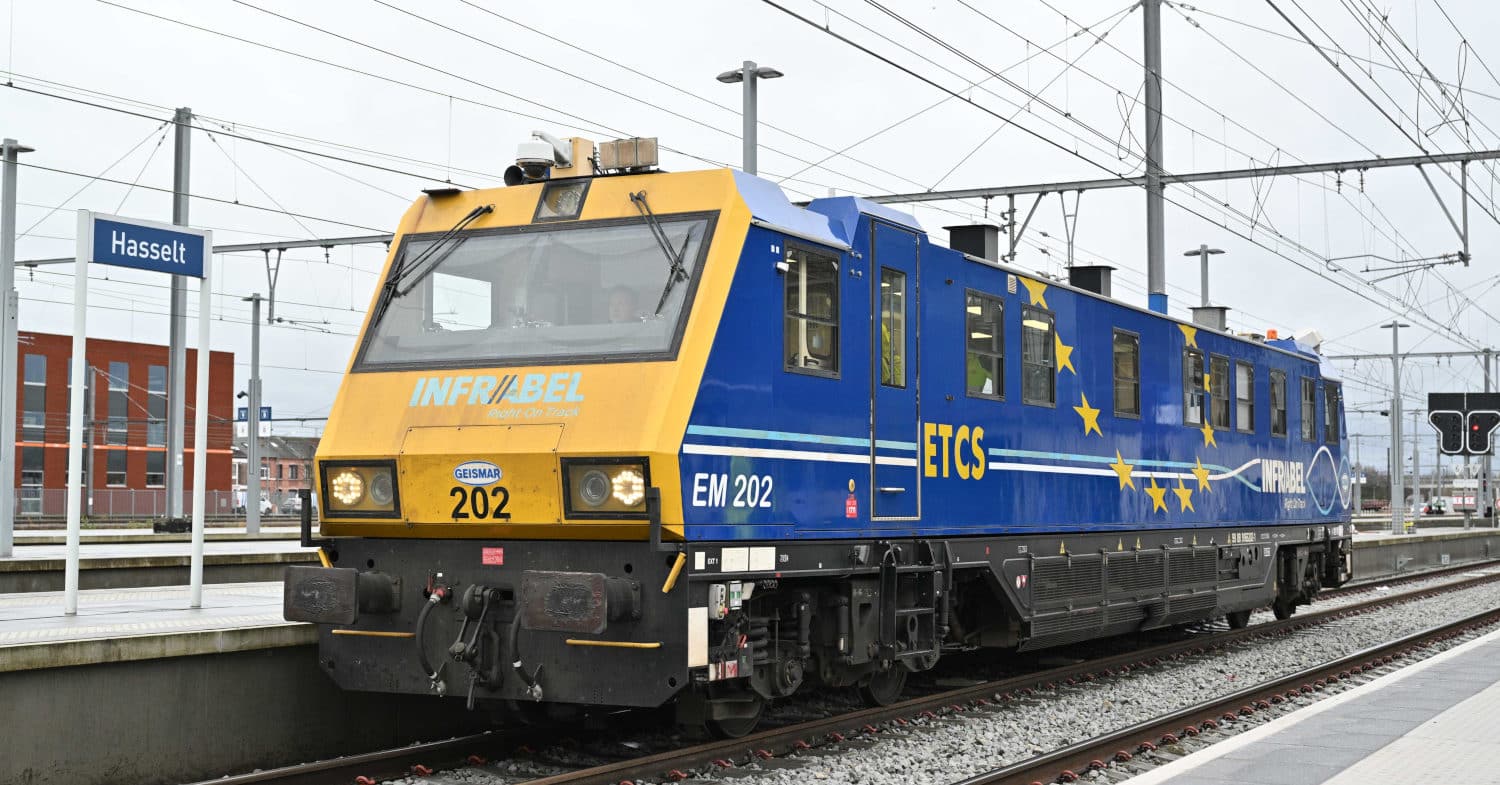
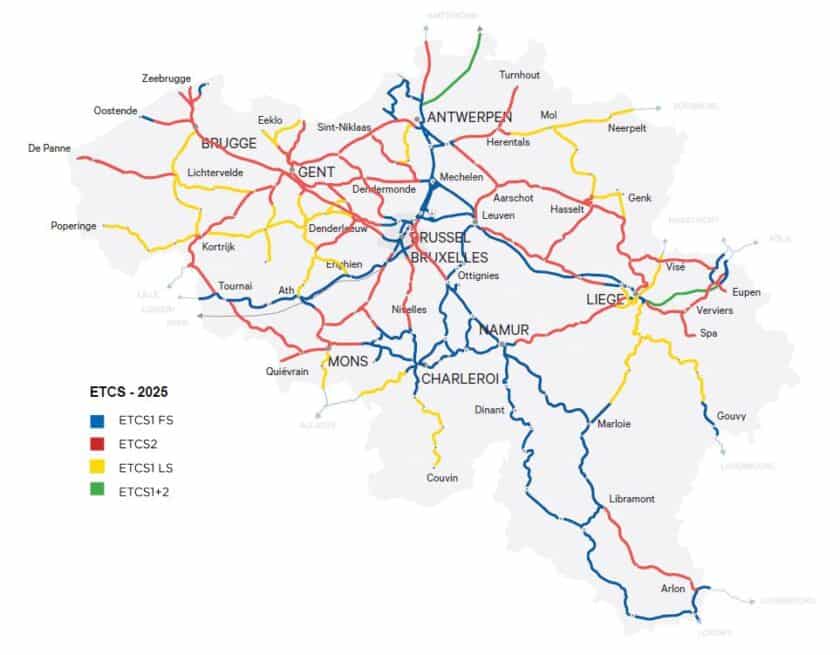
Infrabel, Belgium’s railway infrastructure manager, has reached a major milestone by completing the installation of ETCS (European Train Control System) across its entire 6,399‑kilometre network.
It becomes the second European country, after Luxembourg, to have the system fully in place.
However, a Royal Decree issued in May granted a two‑year extension for rolling stock installation, so ETCS will coexist with the legacy TBL1+ and Memor‑Crocodile systems until December 2027.
The completion marks the culmination of an ambitious technological renewal programme launched more than a decade ago, involving around 1,500 professionals and an investment of roughly €2.8 billion.
A programme born from the need to boost safety
The origins of Belgium’s ETCS plan can be traced directly to the Buizingen rail disaster of February 2010. In response, the country approved an “ETCS Masterplan” in October 2011, setting out clear goals to progressively strengthen operational safety.
The strategy was implemented in several stages, starting with the rollout of TBL1+—an upgraded version of the 1980s TBL1 system—completed in 2015 and designed to ensure compatibility with ETCS on‑board systems. The second phase involved the gradual deployment of ETCS itself.
The results are telling: Infrabel reports that signal overruns have dropped by half since 2010—from 104 incidents that year to just 51 in 2024. Even more significantly, thanks to automatic ETCS intervention, none of these incidents posed an actual collision risk last year.
A complex yet efficient network
The project’s scope explains both its duration and investment. Installing ETCS across Belgium’s network required 11,144 equipped signals, 48,398 balises distributed along the tracks, and 658 GSM‑R antennas to enable data transmission between infrastructure and trains. Over one million route tests were performed to ensure full system operability.
Operationally, ETCS functions as a continuous speed control system. When a driver exceeds the authorised speed or fails to comply with signal aspects—such as approaching a red signal or a speed restriction—the system automatically intervenes: first by progressively reducing speed and, if necessary, triggering an emergency brake application.
Towards full operability: the rolling stock challenge
While the infrastructure is now entirely equipped, full system functionality still depends on the onboard installation of ETCS across the rolling stock fleet.
The aforementioned Royal Decree sets December 2027 as the deadline for all trains operating on the Belgian network to carry compatible ETCS equipment.
Once that objective is achieved, Infrabel estimates the residual risk level will be reduced by a factor of sixteen compared with 2010 figures.
By design, ETCS is a European interoperability standard, meaning a compatible train from any member state can run seamlessly on any ETCS‑equipped line.
Belgium’s central role as a European transport hub—with three international freight corridors linking key ports and logistics terminals—further strengthens its position as a pivotal element of the continent’s railway network. The European Union requires these freight corridors to be ETCS‑equipped by 2030.
Beyond safety, ETCS also delivers notable side benefits: by enabling smoother and more predictable driving profiles, it lowers train energy consumption compared with operations based on frequent acceleration and braking cycles.
Political recognition and future outlook
Belgian authorities have underscored the strategic significance of this achievement. Jean‑Luc Crucke, Federal Minister for Mobility, stated that the full ETCS deployment “confirms the choice for a higher level of safety on the tracks” and provides “a modern foundation for the continued growth of rail traffic.”
Likewise, Vanessa Matz, Minister for Public Action and Modernisation responsible for rail policy, stressed that ETCS “considerably reduces the risk of tragic accidents such as Buizingen.”
With the infrastructure phase now complete, Belgium enters a new stage: the full operational integration of its rolling stock. The coming years, leading up to December 2027, will be decisive in consolidating a railway safety model that has already made the country a European benchmark.