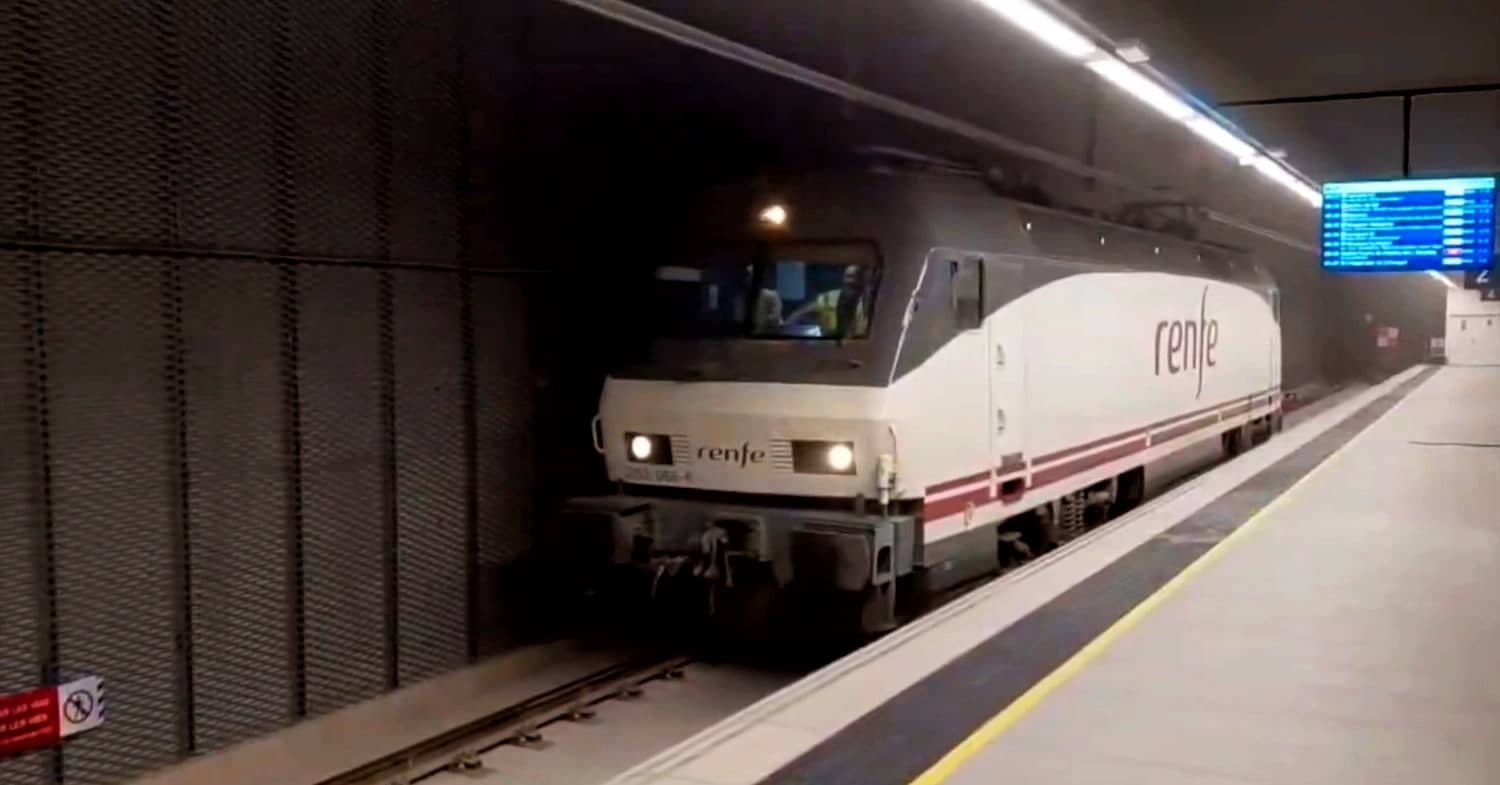
Test running on the new railway branch to Josep Tarradellas Barcelona-El Prat Airport began last week. Adif reported that, on the first day, a Renfe Class 252 locomotive completed 26 runs—13 return trips—between El Prat and the new Aeroport T1 station, calling at the underground Aeroport T2 station.
The tests are being used to verify the track, overhead line equipment, points, signalling and the system’s integration with Adif’s control centre at França station. No significant incidents have been reported so far.

The infrastructure, which includes a tunnel more than four kilometres long beneath the airport runways, will be used by the future R-Aeroport service operated by Ferrocarrils de la Generalitat de Catalunya (FGC). Criticised by experts and passenger associations, the service will link Sant Andreu with T1 and is scheduled to enter service during the first months of 2027, provided there are no changes. FGC began the authorisation process for its Class 312 trains—internal designation—or 431-200 units—RFIG designation—last November.
The connection, with a budget of more than €400 million, is intended to link central Barcelona with T1 in under 20 minutes. However, passenger groups and public transport advocacy organisations have questioned its impact on the already congested Passeig de Gràcia tunnel and the possible introduction of differentiated fares. The main cause for concern is the use of low-capacity trains that would terminate at Sant Andreu.