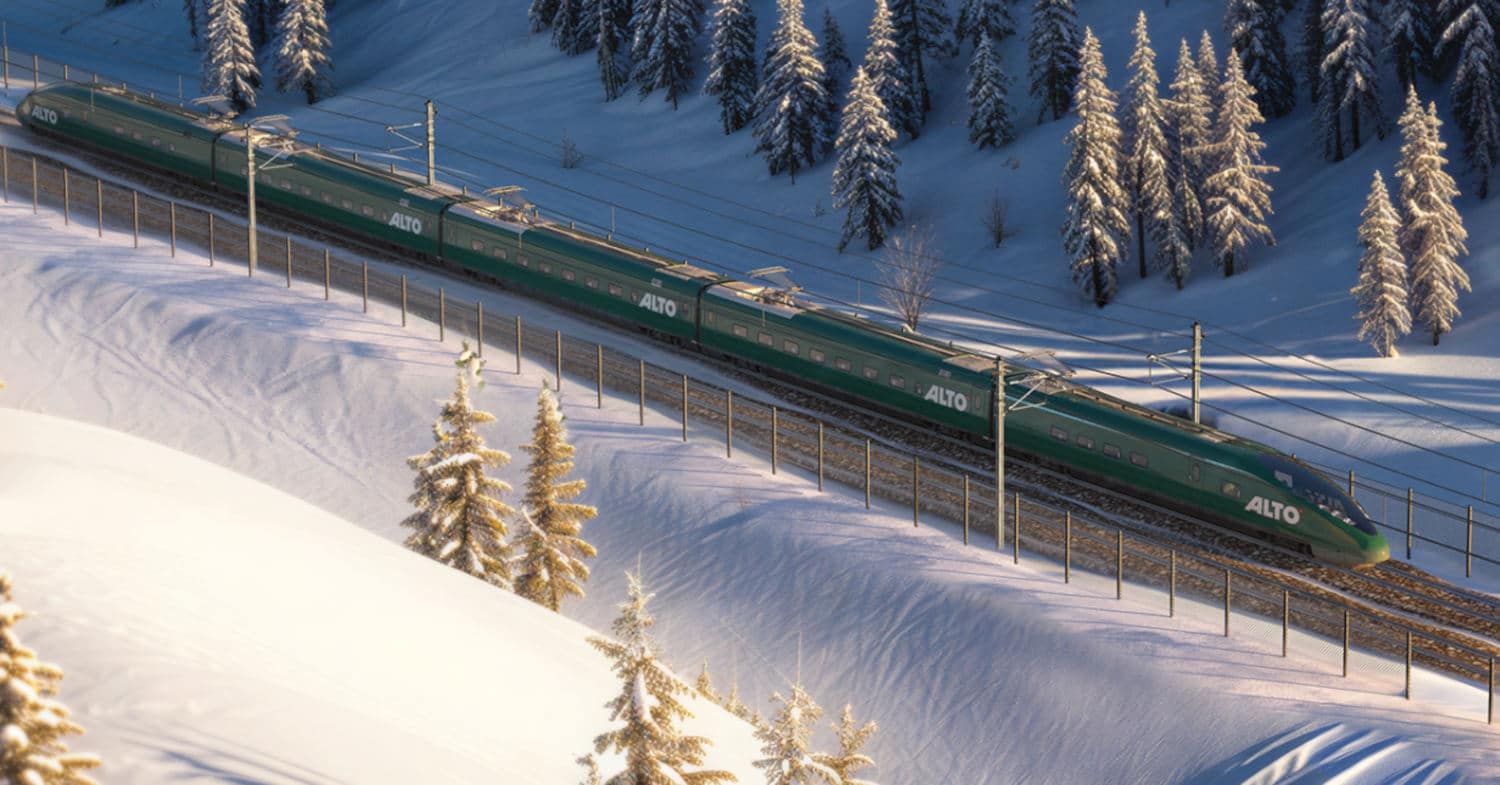
The Government of Canada today confirmed that the first section of the country’s future high-speed rail network will connect Ottawa and Montreal.
The announcement, made by the Minister of Transport and Government House Leader, Steven MacKinnon, alongside the president and CEO of Alto — the entity responsible for the project — Martin Imbleau, marks a key milestone in the creation of Canada’s first high-speed rail system.

Covering roughly 200 kilometres, this initial phase will accelerate the benefits for communities in both provinces and help train a skilled workforce for the later extension of the line towards Toronto and Quebec City. Construction is slated to begin in 2029.
Starting in January 2026, Alto will launch a three-month public consultation process, including in-person, virtual, and online sessions, to gather input from citizens, Indigenous communities, and municipalities regarding the route alignment and station locations.
The full project, stretching around 1,000 kilometres between Toronto and Quebec City and designed for speeds of up to 300 km/h, aims to transform mobility across Canada. According to Alto’s estimates, the investment could contribute up to C$35 billion to GDP and create more than 50,000 jobs.