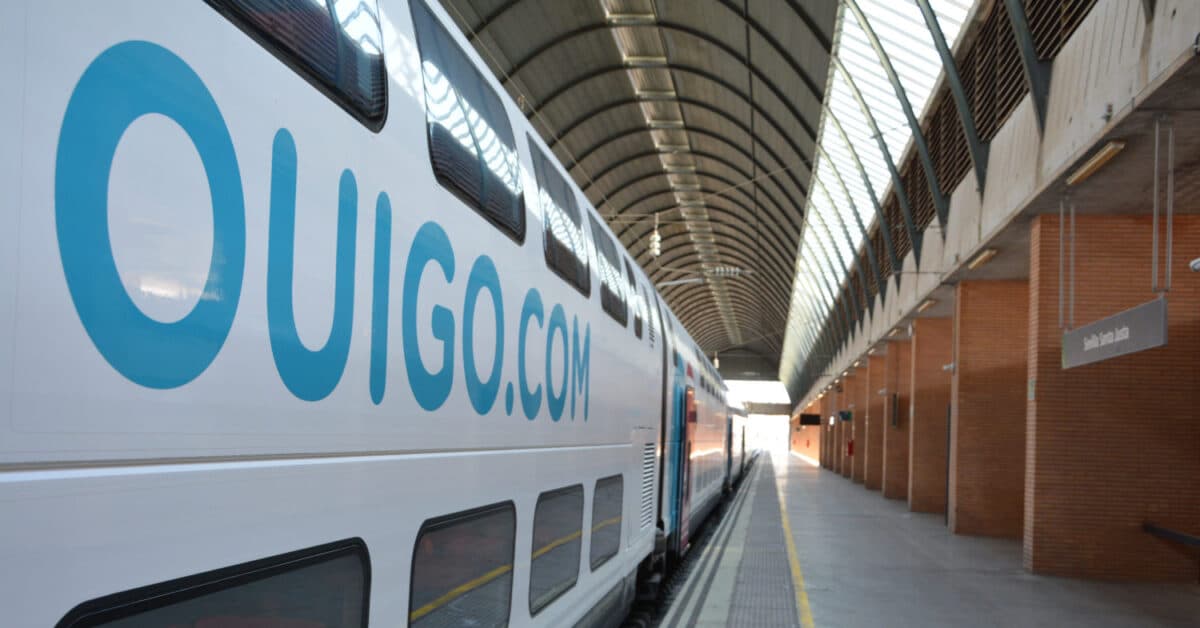
French-owned operator Ouigo España has suspended several high-speed services between Madrid, Sevilla and Málaga until 22 January for “operational reasons”. This reduces eight daily trains from Friday to Monday and six from Tuesday to Thursday on both routes, impacting around 15,000 passengers.
The first day of cancellations was 7 January, when, without prior notice, it axed three workings on the Madrid-Murcia line, stranding passengers. Systematic cancellations on the Madrid-Andalusia corridor began the following day, 8 January.
Despite repeated enquiries from this magazine, the operator offers no response or details on these “operational reasons”. Opacity reigns, with no official communiqué beyond notifications to affected punters and a statement with basic information. All public comms from the operator focus on promoting January’s Pink Days.
No alternative travel
Unlike Renfe, SNCF or most European public operators, Ouigo provides no alternative transport for cancellations. Affected punters – all 15,000 of them – must fend for themselves.
The budget operator offers free ticket changes or refunds with 50% to 200% compensation depending on notice period, exceeding legal minimums in some cases. The company regrets the inconvenience and claims to have notified affected passengers in advance.
Renfe bolsters service to absorb cancelled demand
In response, Renfe has scheduled special Avlo workings between Madrid and Sevilla to provide options for some displaced passengers. It has also reinforced other trains to soak up some of the spilled demand.
Citing its public service remit, this is not the first time Renfe has “rescued” stranded Ouigo or iryo passengers from cancellations.
Under EU regs, if rail operators fail to provide alternatives within 100 minutes, punters can claim for meals, accommodation or alternative transport. Thus, in this scenario the state operator sells tickets, then passengers can seek reimbursement from Ouigo.
Renfe staff and sector experts maintain the lack of alternatives is a cost-saving ploy.
While the Spanish public operator holds pricey contracts with bus firms for rail substitution in disruptions, other high-speed TOCs do not.
Though the firm chaired by Álvaro Fernández Heredia does not disclose total spend, it notes €375,000 was shelled out on buses, taxis, and hotels during Galicia wildfire cancellations – despite it being materially impossible to cover all passengers.